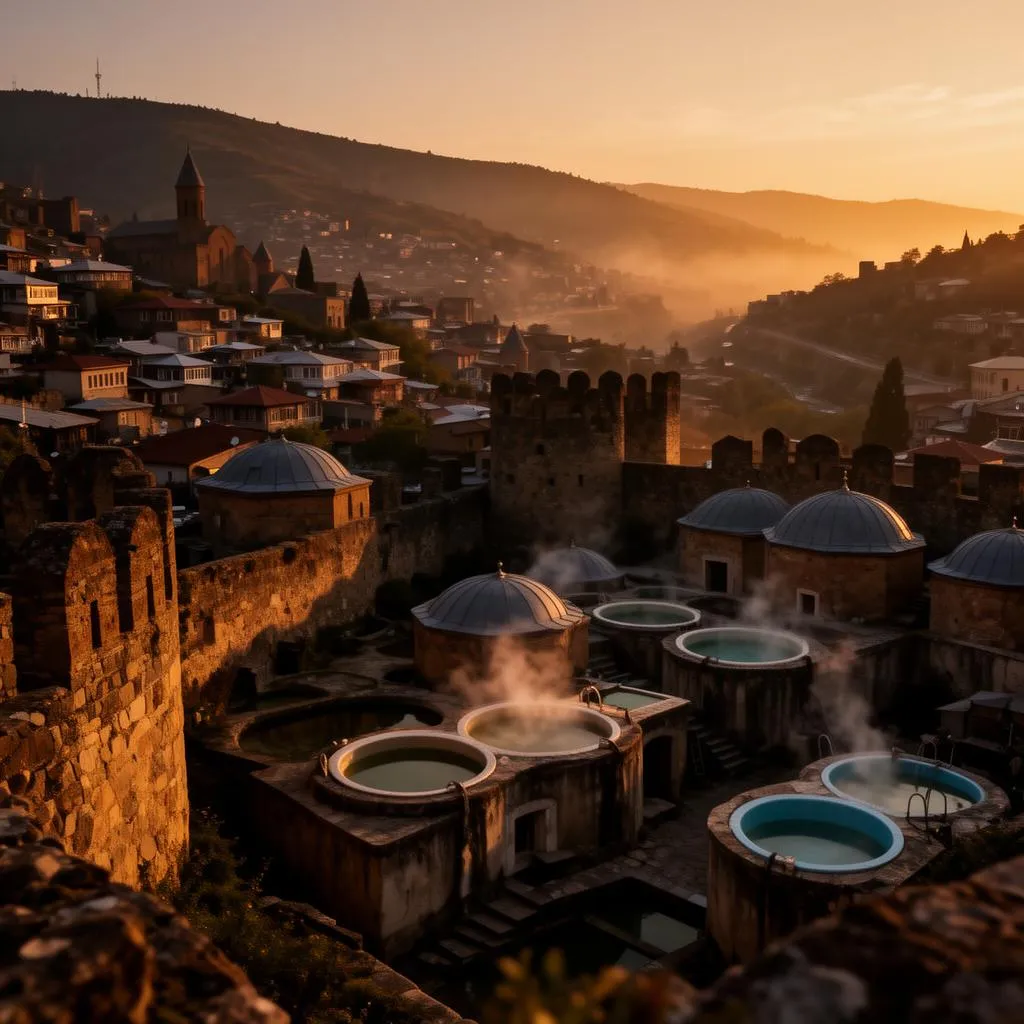
Tbilisi
Tbilisi grew up around its sulphur springs — the city's Georgian name, Tpilisi, literally means 'warm place'. Walk Abanotubani's bathhouse alley at dusk and the steam still curls between the brick domes, just as it did when 5th-century legend says the king found his pheasant boiling in a hot stream and decided to build a capital here.
What surprises first-time visitors is how layered it all is: a Persian-tiled mosque on one street, a Russian-style boulevard on the next, and crooked wooden balconies in between that look like they were carved by someone humming. Old Town is small enough to wander without a map; Vake and Vera, the leafy uphill neighbourhoods, reward an afternoon of café-stops.
Come for the food (khinkali dumplings, fresh-baked shotis puri, supra feasts that double as oral history). Stay for the toasts — long, sincere, and the closest thing Georgia has to a national art form.
Top places
Inside the collections
What we'd tell a friend
Khinkali at Veliaminov, eaten with your hands — the dumpling's twisted top is the handle, not a bite.
Sunset from Narikala fortress. The cable car up costs ₾2.50 and beats every restaurant view in town.
A bottle of saperavi from Dezerter Bazaar — cheaper than the wine list at any restaurant, twice as good.
Good to know
- 1Cover shoulders + knees when entering churches; women cover their hair.
- 2Toast carefully — at a supra (feast) you don't sip wine between toasts, only when one is made.
- 3Don't refuse food. Hosts will keep refilling; leaving the plate empty signals you want more.
- 4Bargaining at flea markets is fine, gentle. At regular shops, prices are fixed.
- 5Tap water is drinkable in central Tbilisi. Sparkling Borjomi water is the local pride.